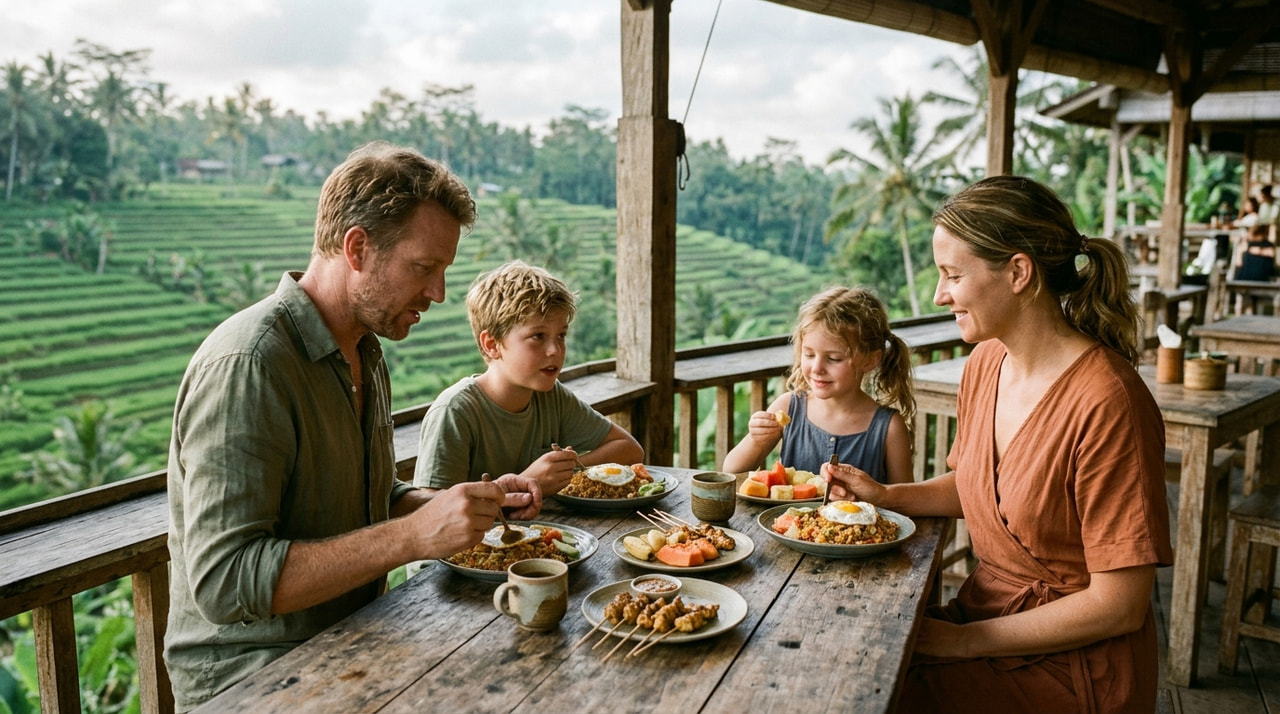
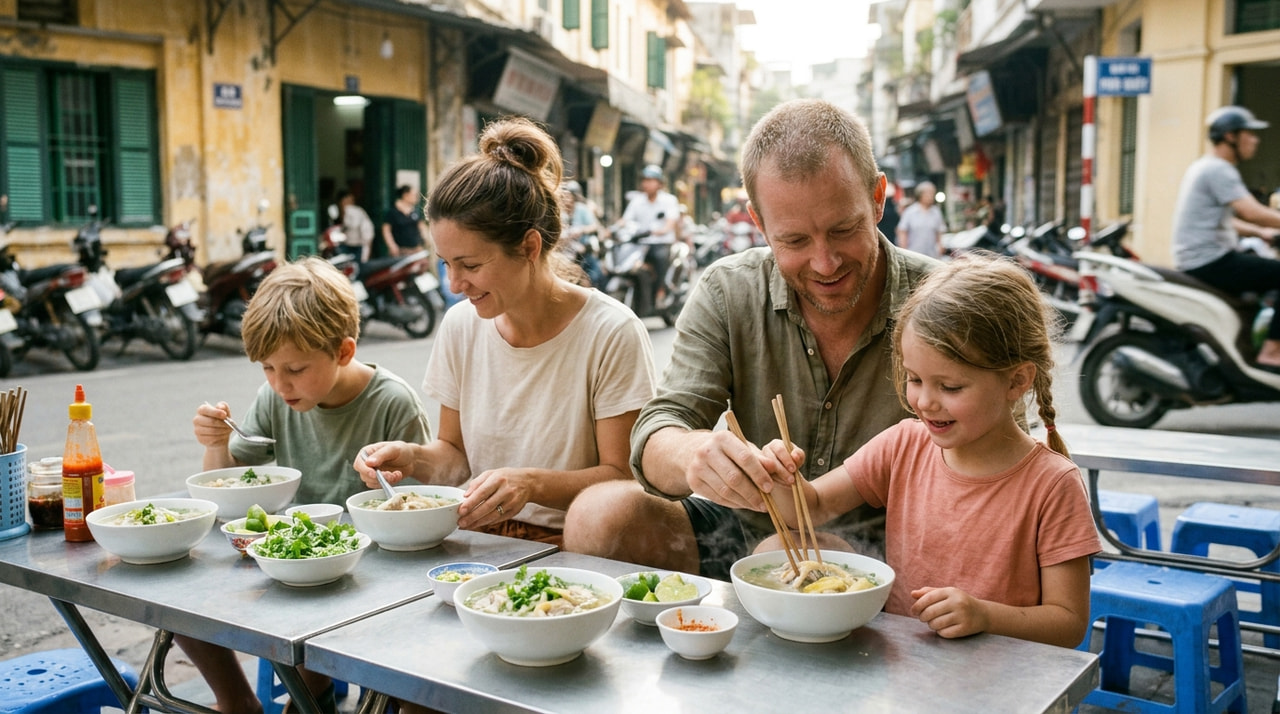
The blue plastic stools on the pavement outside a Hanoi shophouse sit barely thirty centimetres off the ground. For an adult, sitting on one means an awkward fold of the knees. For a small child, it is immediate perfection: the table is exactly at chest height and the bowl arrives steaming.
Eating on the street is one of the most rewarding things a family can do in Vietnam. For many parents, though, the first encounter brings hesitation. We worry about water, refrigeration, unfamiliar spices and a bad night in a hotel room. Those worries are fair, and some are worth acting on.
This guide covers what to look for, what to order, what to skip, and where the official health advice is firm. It will not promise that street food is risk-free. It gives you a way to eat well with children while keeping the risks small.
The rules that matter most
1. Hot food, served hot
The CDC's guidance on food and drink while travelling says to avoid lukewarm food: cold food should be served cold, and hot food should be served hot. At a street stall that is easy to spot. A pot of broth that is boiling, a pan or grill in use and a dish assembled in front of you all point the right way. Food that has been sitting out for a while does not.
2. Fruit you can peel
The CDC says fruit or vegetables may be safer to eat if you can peel them yourself or wash them in bottled or disinfected water. For children, that makes bananas, mangoes, oranges and similar fruit an easy choice, and raw salad leaves a place to be careful.
3. Water and teeth
Use bottled or disinfected water for drinking and for brushing teeth. The CDC notes that tap water can be disinfected by boiling, filtering or chemical treatment.
4. Ice: skip it unless you know
Many guides say that tube ice is safe. We could not find that in official advice, so we will not repeat it. The CDC says not to use ice in destinations with limited access to clean water, or where there is a concern about contaminated drinking water, because it was likely made with tap water. The sensible approach with children is to order drinks without ice. If a restaurant you trust tells you its ice is made from treated water, that is your call.
5. Wash hands
The CDC also advises practising safe food and water habits, including washing hands at key times. A small bottle of hand sanitiser and some wet wipes in your bag do more good than almost any other precaution. The WHO publishes its "five keys to safer food" for anyone who handles or eats food, and it is worth a read before you go.
Wholesome dishes with no red meat
Vietnamese food is easy for families who avoid beef and pork, because chicken, egg, seafood and vegetable dishes are everywhere.
Morning noodle soups
Phở is the dish most visitors meet first. Wikipedia says it originated in northern Vietnam in the early 20th century, and that it was originally sold as a snack at dawn and dusk by street vendors. The Hanoi and Saigon styles differ in noodle width, sweetness of the broth and choice of herbs. Ask for phở gà, the chicken version, and keep chilli and herbs on the side. If someone eats vegetarian, ask about the broth, because stock can be made with meat even when the bowl looks plain.
Bánh mì: the handheld classic
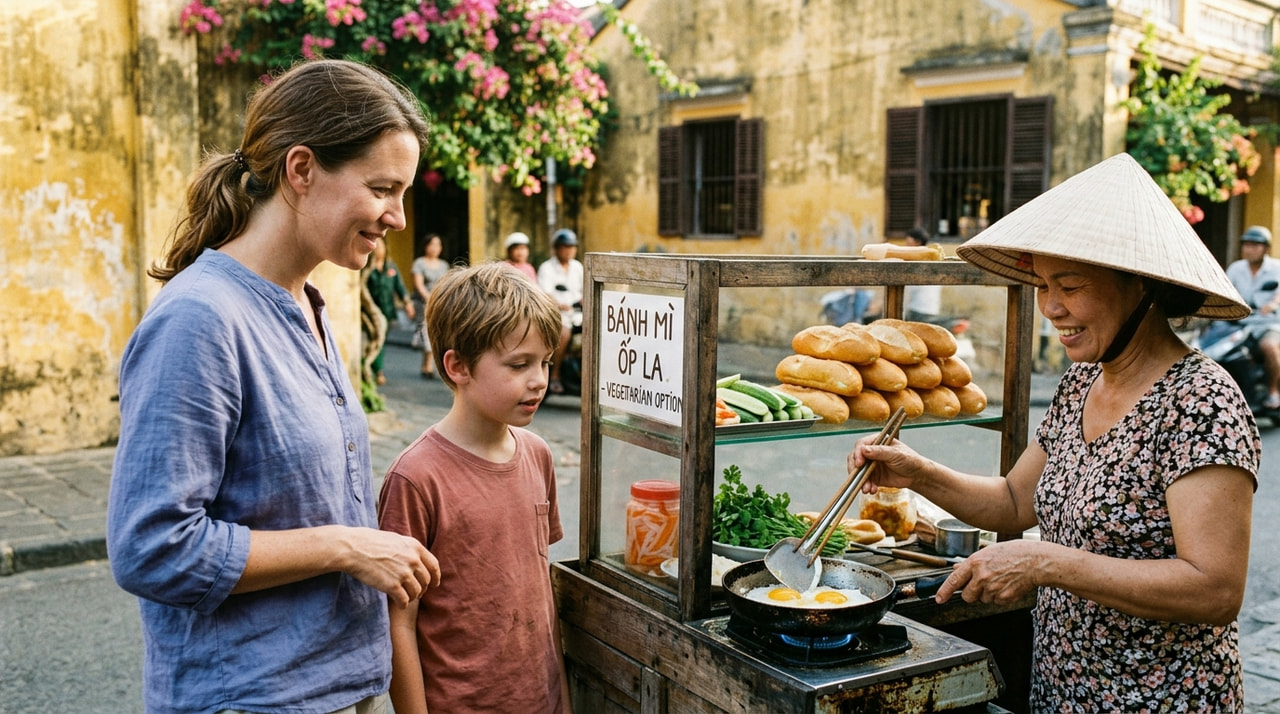
Wikipedia describes the Vietnamese baguette as a short loaf with a thin, crisp crust and a soft, airy texture, and says French colonial administration introduced the baguette in the mid-19th century. A bánh mì with fried egg is an easy breakfast for children, and a good test of a cart's cleanliness: it is made while you watch.
Hands-on food children enjoy
Summer rolls: gỏi cuốn
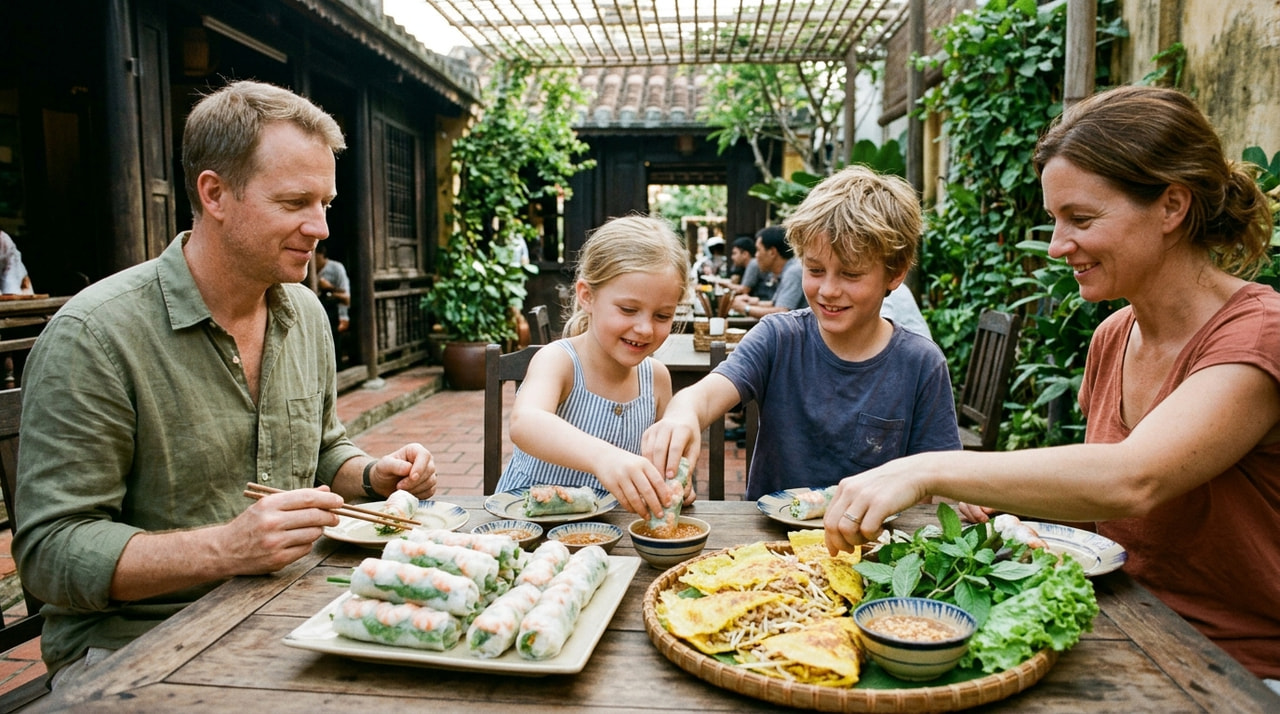
Fresh rice-paper rolls, often filled with prawns, herbs and noodles, are served with a dipping sauce. Wikipedia notes that in central Vietnam they are simply called "rice paper" rolls. Children enjoy dipping and rolling, and the dish is easy to adapt. Because they are served at room temperature, buy them where the rolls are made to order and the stall is busy, in line with the hot-and-cold rule above.
Crispy crepes: bánh xèo
A turmeric rice crepe filled with sprouts and other fillings, wrapped in lettuce and herbs, is another family favourite. Ask for chicken, prawn or vegetables and no pork.
Vegetarian eating
Many cities have vegetarian restaurants, often called quán chay, which serve meatless versions of local dishes. They are a reliable choice if your family does not eat meat, and a good fallback when you are not sure about a stall.
Sweet treats and a peanut warning
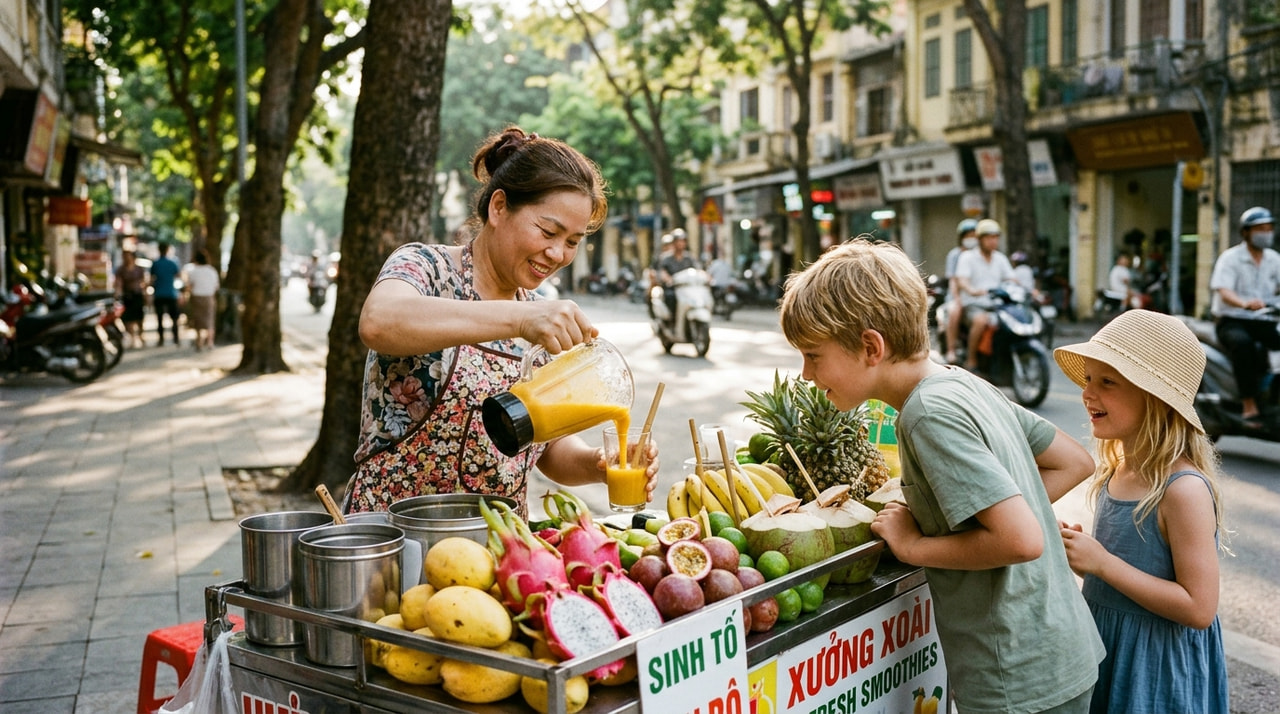
Fresh fruit smoothies, such as sinh tố xoài (mango), are a popular treat. If you want one for a child, ask for it without ice, for the reasons above, and with fruit you can see being peeled.
If anyone in your family has a peanut allergy, be careful. Peanut sauce is used for dipping and as a topping, including with summer rolls. Talk to your doctor before you travel, and plan how you will explain the allergy. A translation card, checked by a native speaker, is worth carrying.
A simple day of eating
A plan helps. Start with breakfast at a busy stall, such as chicken phở or a bánh mì with egg, while children are fresh and the pots are at their hottest. Keep lunch light and near your hotel, with a rest afterwards, because the middle of the day is when small children fade and when food has been sitting longest. Save the more adventurous stall for an early evening meal, when everyone is rested and the cooking is at its busiest. Carry bottled water, wipes and a small snack from the hotel for the moments when a child will not touch anything new.
Let children choose one thing at each meal. A child who points at the dish is more likely to eat it. If a dish is refused, treat it as information and move on, rather than a battle, because plain rice and fruit are always a fine meal on a travel day.
Useful phrases
Keep these on your phone:
- "Không thịt heo, không thịt bò" (no pork, no beef).
- "Tôi ăn chay" (I eat vegetarian).
- "Xin đừng cho ớt cay" (please, no spicy chilli).
- "Không đá" (no ice).
If a child gets an upset stomach
The CDC lists food and water habits among the ways to reduce the risk of typhoid and other illnesses in Vietnam. If a child does have diarrhoea, the most important thing is to keep fluids going. Wikipedia describes oral rehydration therapy as a type of fluid replacement used to prevent and treat dehydration, especially due to diarrhoea, and a pack of oral rehydration salts belongs in your day bag. For babies, young children, a child who is vomiting, has a fever, has blood in the stool, or does not improve, see a doctor, and make sure your travel insurance covers it.
Close with a next step
The point of eating on the street is not to be brave. It is to let your children taste a place while you keep an eye on the few things that matter: hot food, clean water, peeled fruit and clean hands. If you would like help planning a Vietnam trip with the food, the pace and the places worked out in advance, explore our Vietnam Slow Odyssey: Short.