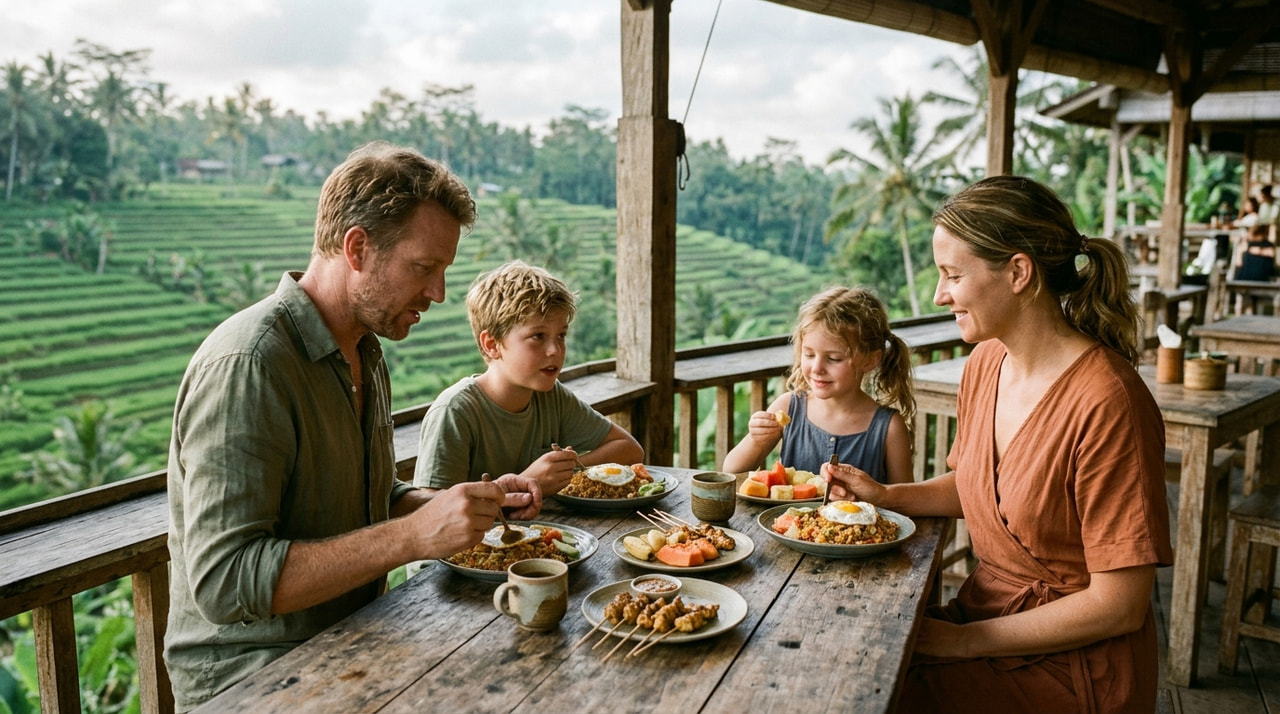
The noon heat has settled over the rice paddies outside Ubud, and your child is staring suspiciously at a banana-leaf-lined basket. Another is already pointing at a golden pile of something crispy behind a glass counter. This is the moment many travelling parents realise that feeding a family in Bali is easier than they feared.
When parents search for a Bali food guide for families, the worry is usually heat. Many expect fiery curries, unfamiliar street food, and children who will eat nothing but white rice for ten days. The practical picture is kinder, provided you know how a Balinese plate is put together and a few words that do most of the work.
Where the chilli lives
Sambal is the chilli condiment that sits at the heart of Balinese eating. One Bali food guide says it is served with "pretty much every meal", and lists sambal matah, a raw mix of chopped shallots, lemongrass, garlic and chilli, as one of the three most popular kinds. Because sambal is a condiment, you can ask for it to be left off or served on the side. That means an adult and a small child can eat the same dish, and the adult adds the fire.
To make sure your server understands that children want no heat, you need two words in Bahasa Indonesia: tidak pedas, meaning not spicy. If you want sambal on the side for yourself, ask for it separately.
The glass-counter ritual: ordering nasi campur
The easiest way to feed a family in Bali is at a warung serving nasi campur, which means mixed rice. Wikipedia notes that outside Indonesia the name often refers to the Balinese version. One guide describes it as a moulded mound of rice in the middle of the plate surrounded by the specialities of the house.
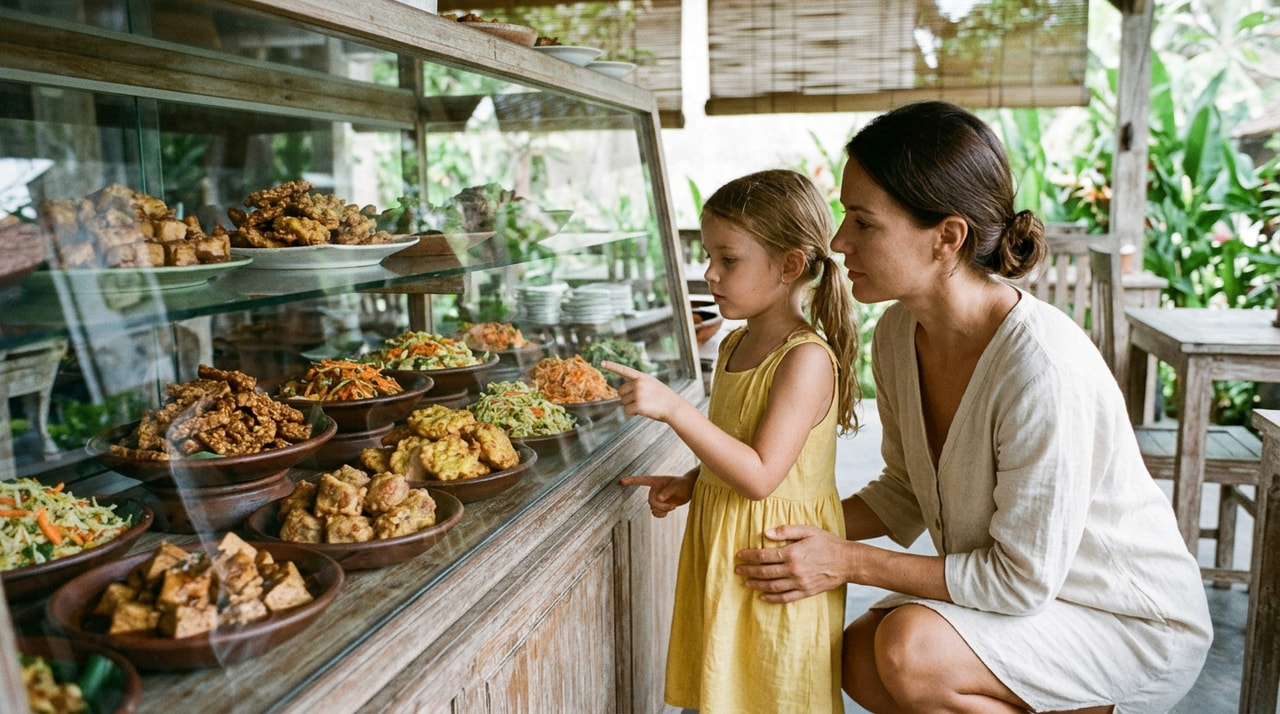
A nasi campur warung is visual. Many have a glass display counter (etalase) showing what is available that day. Children do not have to decode a menu, because they can walk to the glass and point.
Here is how it usually works:
- Pick your rice. The person behind the counter scoops rice onto a plate.
- Point to your dishes. Walk along the counter with your child and choose two, three or four items. The server arranges a small scoop of each around the rice.
- Control the chilli. As the server finishes the plate, say tidak pedas for the children, or ask for sambal on the side for yourself.
- Order drinks separately. Fresh juice and young coconut water are easy to find, but follow the water advice in the fruit section below.
- Pay at the end. Prices differ from warung to warung, so there is no single figure to quote here.
The counter is fullest earlier in the day, so lunch makes a good main meal for the family.
A plan for the fussy eater
If your child is cautious, make the first meal easy. Start with plain rice, a fried egg or a piece of fried tofu, and a little fruit, and let them add one new thing from the glass counter at each meal. Pointing is part of the fun, and a child who chose the dish is far more likely to taste it. Keep a packet of wet wipes in your bag, eat when the family is hungry rather than exhausted, and do not turn a refused dish into an argument. A bowl of plain rice is never a failure on a travel day, and most children widen their choices within a few meals once they see you eating with enthusiasm.
Protein without red meat: chicken, eggs, tofu and tempeh
For families who avoid beef and pork, Bali is easy to manage. Everyday plates lean on chicken (ayam), eggs (telur), tofu (tahu) and tempeh (tempe).
Tempeh is a fermented soybean product. Wikipedia says it is native to the island of Java, where it is a staple source of protein, and that its fermentation and use of the whole bean give it more protein, fibre and vitamins than plain soybeans. Even a sceptical child will often eat it fried and crisp.
Good dishes to point at or order:
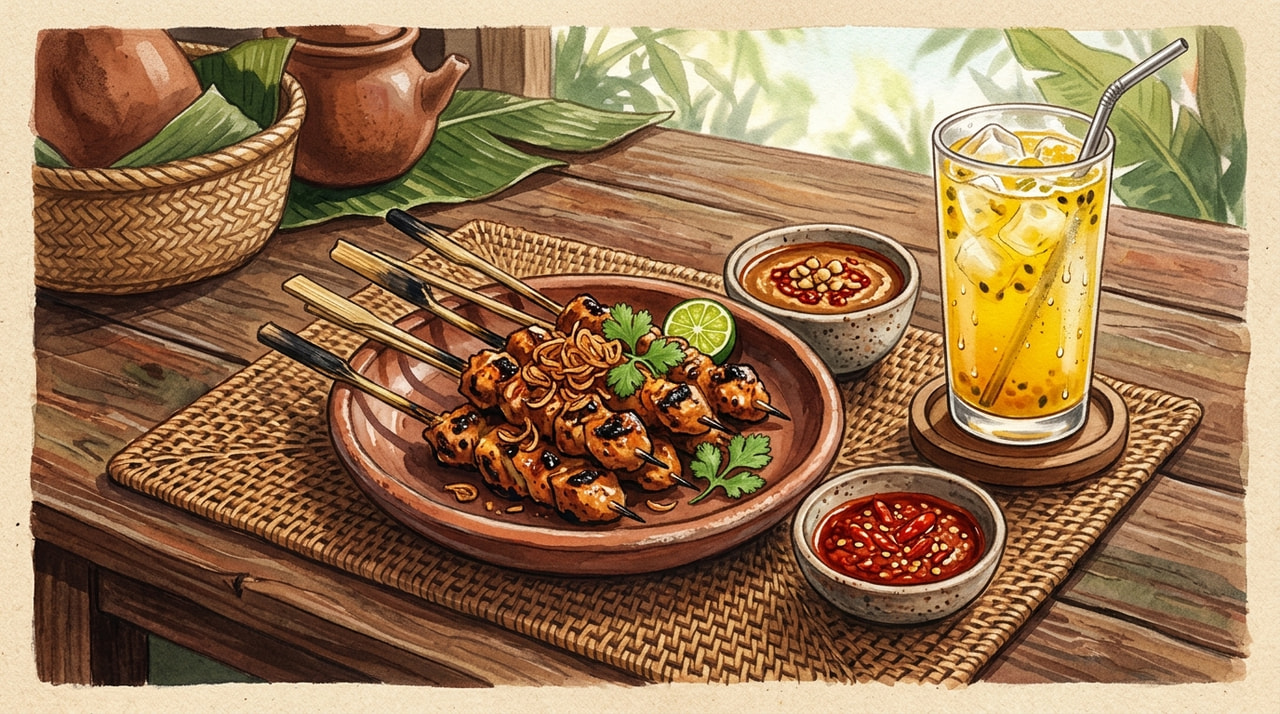
- Sate ayam (chicken satay). Small pieces of chicken skewered and grilled, served with peanut sauce. Satay is a Southeast Asian dish of skewered grilled meat with various sauces, most often peanut sauce. If anyone has a peanut allergy, read the allergy section below first.
- Tahu goreng. Fried tofu, soft inside.
- Telur dadar. An Indonesian-style omelette, easy to ask for plain.
- Nasi goreng and mie goreng. Fried rice or noodles. Ask for tidak pedas.
A Jimbaran seafood dinner
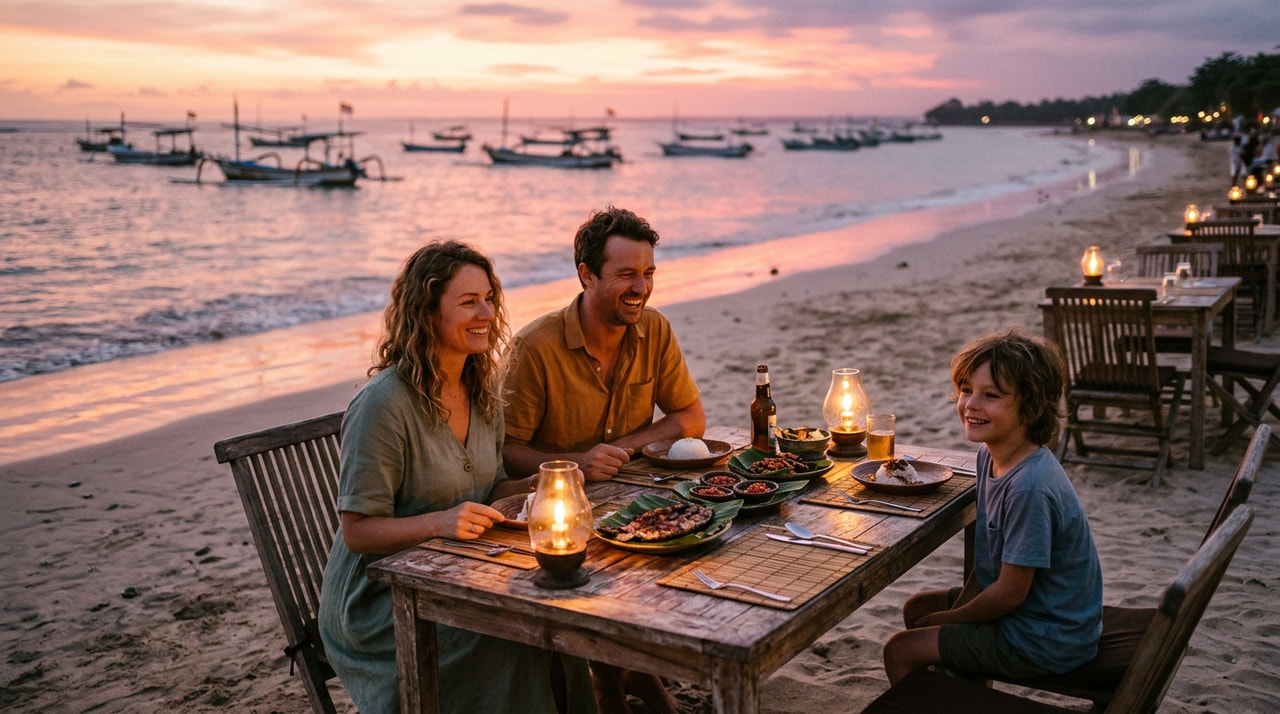
Jimbaran Bay is famous for its seafood restaurants. Lonely Planet describes scores of them lining the 4 km bay and spilling onto the golden sand, with exceptionally fresh locally caught fish barbecued while you soak up the tropical ambience. Another guide says grilled snapper cooked over coconut husk charcoal is one of Jimbaran's signature dishes, and describes candlelit tables on the sand at sunset.
For parents, the setting is the draw. At a conventional restaurant, a long wait tests everyone's patience. On the sand, children can take off their shoes and play near the table while the fish cooks.
Some practical points:
- Arrive early. An early table at the water's edge is quieter, and you will not be waiting on a hungry child.
- Confirm the price. When you pick seafood by weight, confirm the final price before ordering. One local guide gives the same advice.
- Watch for bones. Whole grilled fish has fine bones. For younger children, ask for fillets, or choose peeled prawns or squid.
Fruit children enjoy peeling
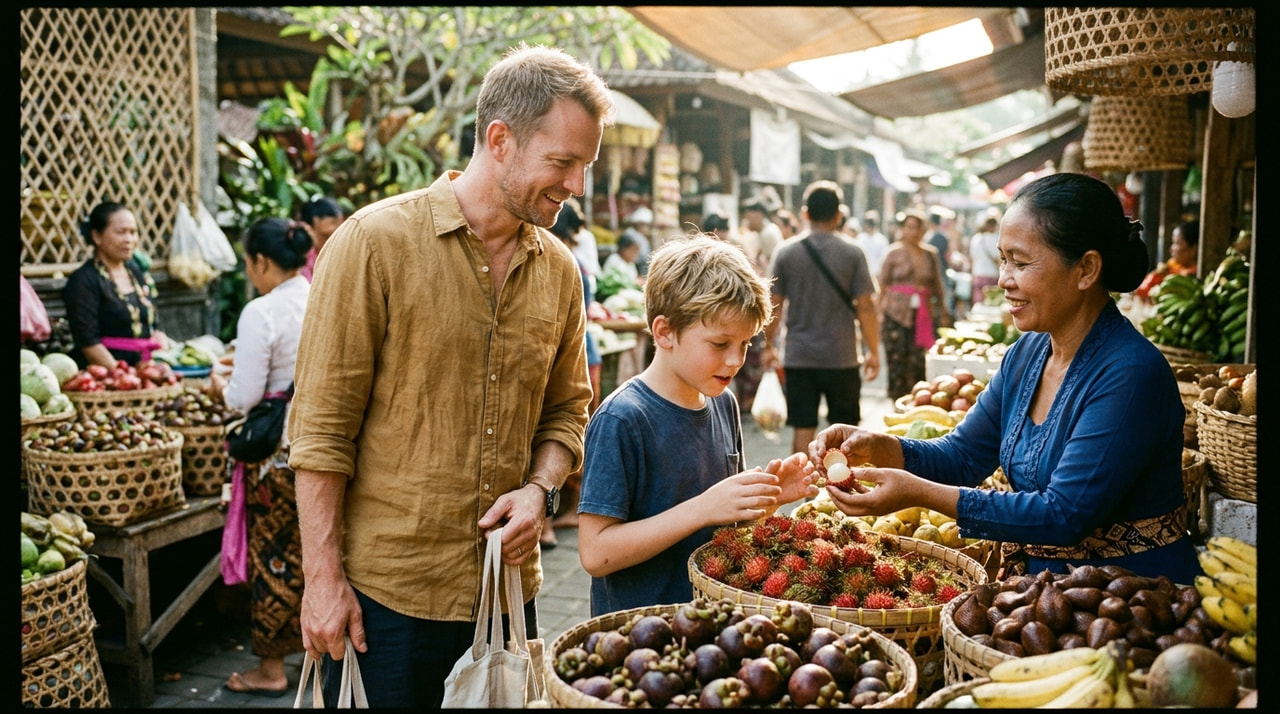
Fruit stalls turn snacking into a game. A simple rule keeps it safe: the CDC advises travellers to Indonesia to practise safe food and water habits, so for children, stick to fruit you can peel yourself and drink only bottled or treated water.
- Salak (snake fruit). It has a reddish-brown scaly skin that is removed before eating. Wikipedia describes the taste as sweet and acidic with a notable astringent edge, which varies between kinds.
- Rambutan. The leathery skin is covered in fleshy, pliable spines, which is where the name, meaning "hairy", comes from. The fruit is sweet and has a single seed, so teach children to nibble round it.
- Mangosteen (manggis). Squeeze the fruit between your palms until the shell cracks. Wikipedia notes that the purple juice from the rind can stain skin or fabric, so keep clothes in mind.
The peanut word: kacang tanah
Peanuts matter in Bali. Satay is served with peanut sauce, and peanut sauce shows up in other dishes too. If someone in your family has a peanut allergy, talk to your doctor before you travel, and plan how you will communicate.
The key point is vocabulary. In Indonesian, kacang is a general word. Wiktionary lists it as meaning nut and bean, and lists kacang tanah as the word for peanut. If you only say kacang, a server may take it to mean beans. Say kacang tanah.
Keep a short translation card on your phone, and have a native speaker check it:
Planning meals around your family's day
The last point is about timing, not food. Children's energy fades by late afternoon. A long wait in a busy restaurant at the end of a hot day is where meals go wrong.
- Make lunch your main meal. The glass counter is fullest then, and everyone is rested.
- Protect the afternoon. Go back for a swim and a rest.
- Eat dinner early. An early dinner means quicker service and bedtime before exhaustion sets in.
When meals follow the rhythm of the day, food stops being a logistics problem and becomes a way into Balinese life. If you would like to experience this unhurried pace on a complete journey planned from home to home, explore our Bali Reimagined expedition.