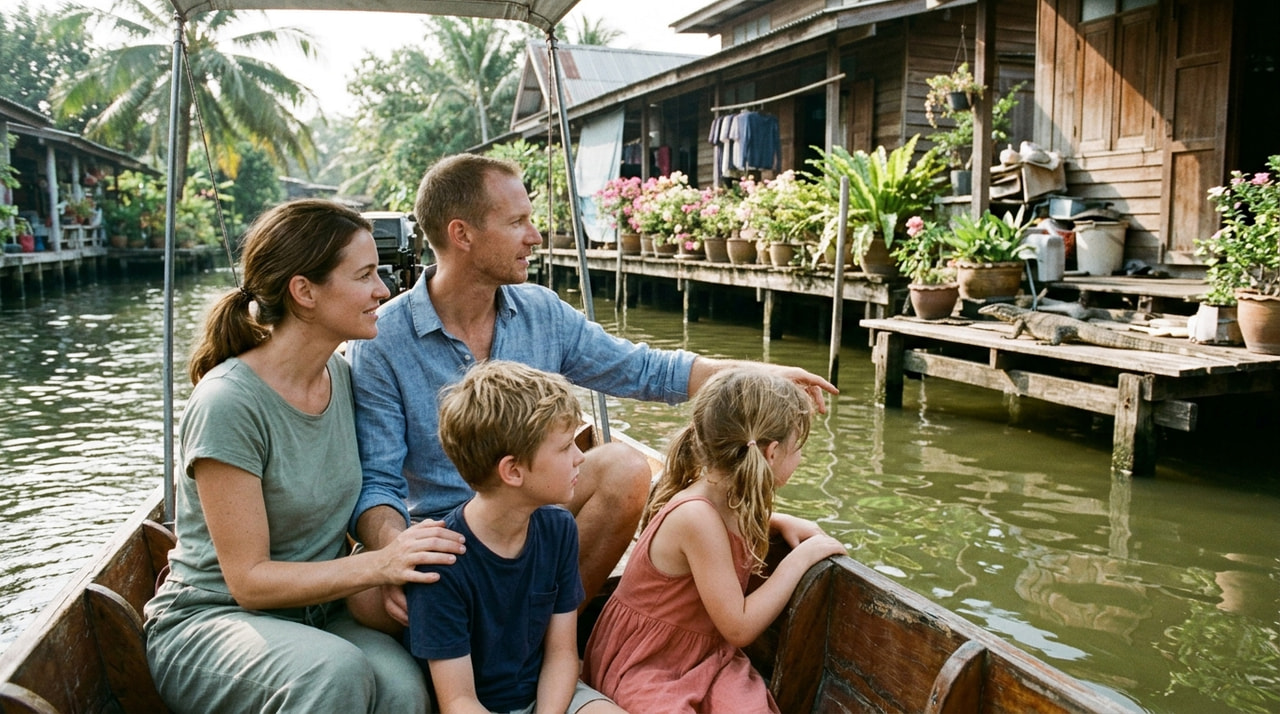
The morning propeller cuts through a quiet Bangkok canal, sending small ripples toward wooden stilt verandas lined with potted plants. A boy leans over the gunwale, watching something move in the green water. His sister points at a lizard sunning itself on a jetty. Nobody is checking a phone.
This is the side of Thailand that package tourism often skips.
When parents plan a thailand family holiday, the default advice points south to the beach islands. They are lovely, but Thailand has other chapters. Its waterways, forests and northern craft villages suit families who like to move slowly and give children room to look.
Three chapters, one unhurried route
A calm route avoids hopping between airports and gives each place enough nights to feel like somewhere you have been.
- Chapter 1: Bangkok from the water (days 1 to 3). Canals, river temples and a slow start.
- Chapter 2: Khao Yai (days 4 to 6). Forest, wildlife and cooler air, a few hours from the city.
- Chapter 3: Chiang Mai (days 7 to 12). Craft villages, food and an elephant visit done properly.
For a journey planned end to end around this rhythm, see our Thailand Redefined expedition.
Bangkok by water
Bangkok with children can feel daunting if you only see its traffic. Treat the river and the canals as part of the city.
The Thonburi canals
A khlong, Wikipedia explains, is a type of canal found in Thailand. As of 2019 there were 1,682 canals in Bangkok, totalling 2,604 kilometres. On the Thonburi side of the Chao Phraya, the article says many of the traditional small waterways still exist, while they are nearly gone from the other side of the river. A boat trip along them is a gentle way to see how the city once lived.
Hire a boat through your hotel or a licensed operator, agree the route and price before you set off, and ask for life jackets in child sizes. Go early, when the light is soft and the water is calmer, and take hats and plenty of water.
On a trip around 2025 we stayed in an ibis hotel in Bangkok. It was not our best stay, and the breakfast was average, so read recent reviews and look at the breakfast before you book.
Temples without the midday meltdown
Wat Pho is a good first temple for children. Wikipedia says the complex houses the largest collection of Buddha images in Thailand, including a reclining Buddha that is 46 metres long. Go at opening time, before the heat builds, and keep the visit short. Cover shoulders and knees, wear shoes that slip on and off, and check each site's rules before you go.
Khao Yai: forest within reach of the city
You do not need a long flight to find real forest in Thailand. Khao Yai National Park was established in 1962 as Thailand's first national park, according to Wikipedia, and has an area of about 2,166 square kilometres. The park is home to the Asian elephant, gibbons, pig-tailed macaques, muntjacs and sambar deer.
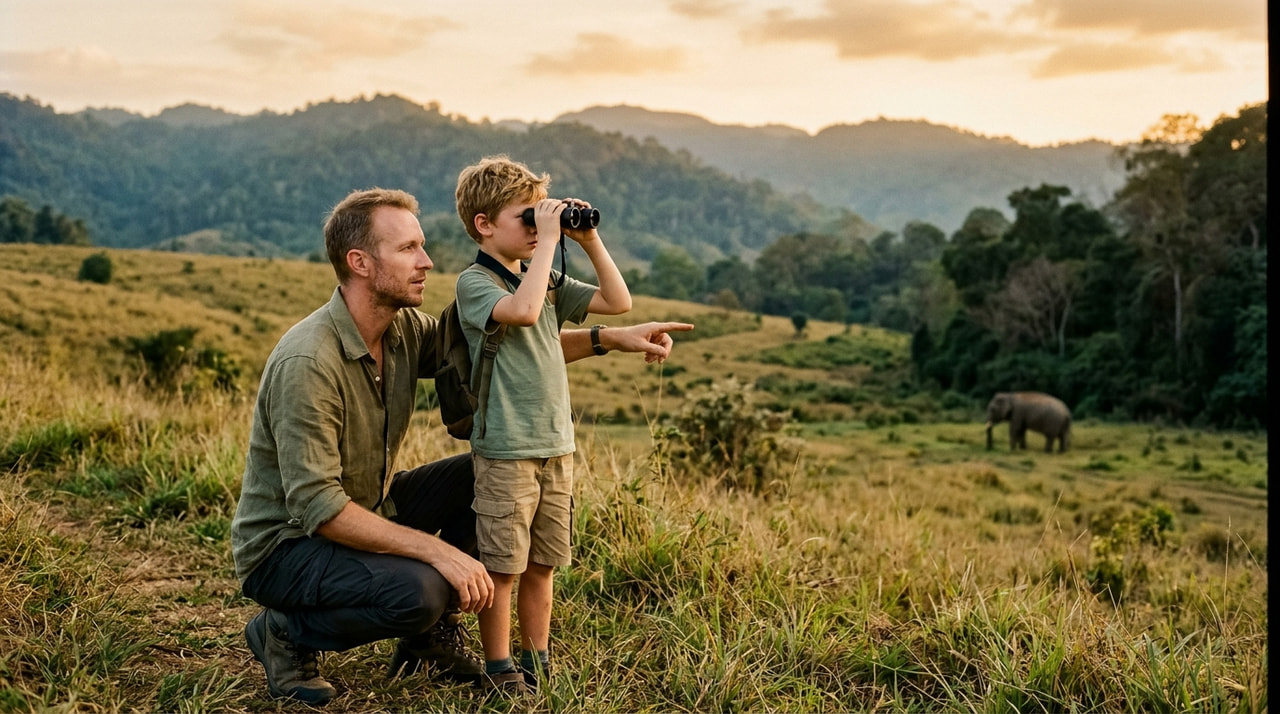
UNESCO lists the Dong Phayayen-Khao Yai Forest Complex as a World Heritage property that stretches 230 km, and says it is home to endangered species including the Asian Elephant. Wikipedia's article on elephants in Thailand adds that the areas with the most marked increase in wild elephants included the Dong Phayayen-Khao Yai forest complex.
Keeping children and wildlife safe
- Keep your distance. Wild elephants are not tame. Watch from a vehicle or a viewing platform, with a guide, and never approach.
- Go with a licensed guide. A guide reads animal behaviour and knows the park rules.
- Ask your doctor about malaria. The CDC says malaria is a risk in some parts of Thailand and recommends prescription medicine for travellers going to certain areas. Do not assume any region is risk free. Check your route with a doctor, and protect children from mosquito bites, because dengue is also present.
The journey north
Chiang Mai is far from Bangkok. Wikipedia notes that the Northern Line serves Bangkok, Ayutthaya, Nakhon Sawan, Phitsanulok, Lampang and Chiang Mai, and that since January 2023 long-distance trains terminate at Krung Thep Aphiwat Central Terminal in Bangkok. A daytime train can be a nice experience for older children, but an overnight journey is a long one for small ones, so many families fly. Check current timetables and your children's patience before you decide.
Chiang Mai: elephants, crafts and air
Plan around the air
Wikipedia describes air pollution as a continuing environmental issue in Chiang Mai, occurring primarily between December and April each year. If you are planning a trip in those months, check air quality forecasts close to your dates, think about a different month, and talk to your doctor if a child has asthma or a breathing problem.
The elephant question
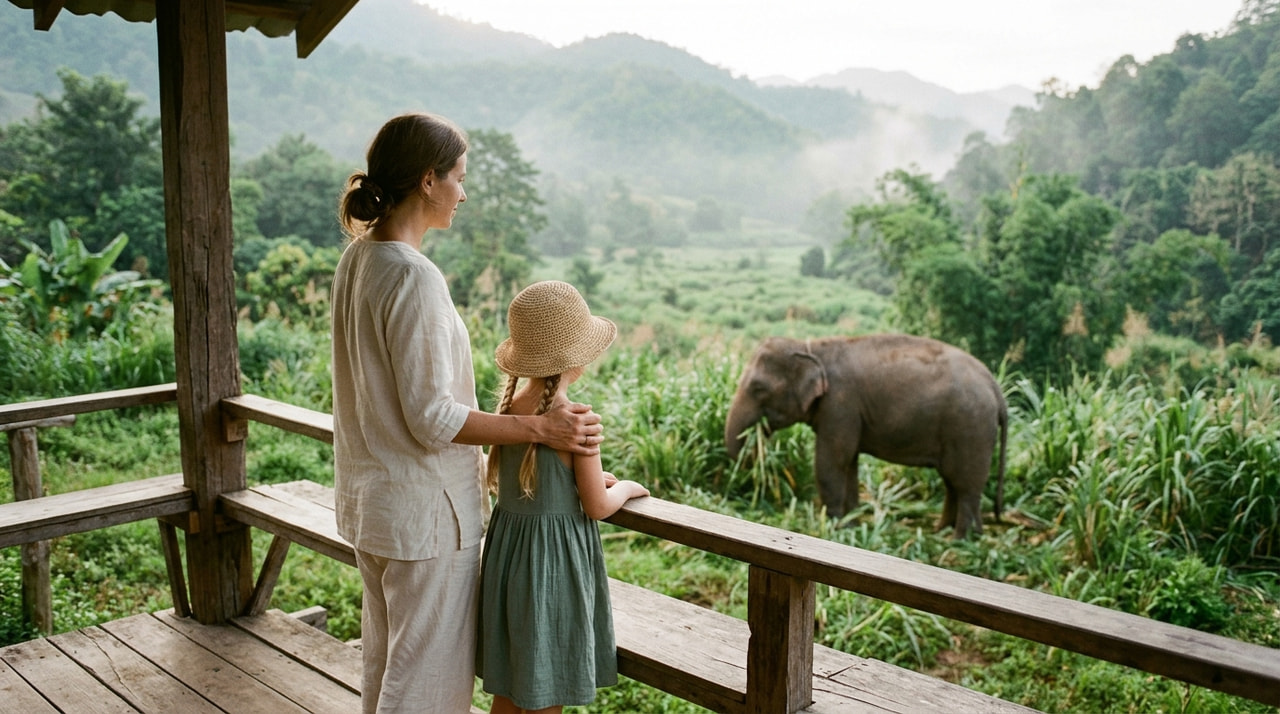
World Animal Protection is direct. It says the best place to see elephants is in the wild, and that if a venue lets you get close enough to ride, bathe or touch an elephant, it is because the animal has been cruelly trained. The Bangkok Post notes that many sanctuaries are branded as ethical but still offer mud bathing and close encounters, and that some tourists find it hard to find a truly ethical, no-touch place.
So treat the word "sanctuary" as a starting point rather than a promise. Ask what the day includes, and walk away if the answer involves riding, bathing, feeding or touching. A visit where you watch elephants from a distance is a good choice for children, who learn that animals are not props.
Bo Sang
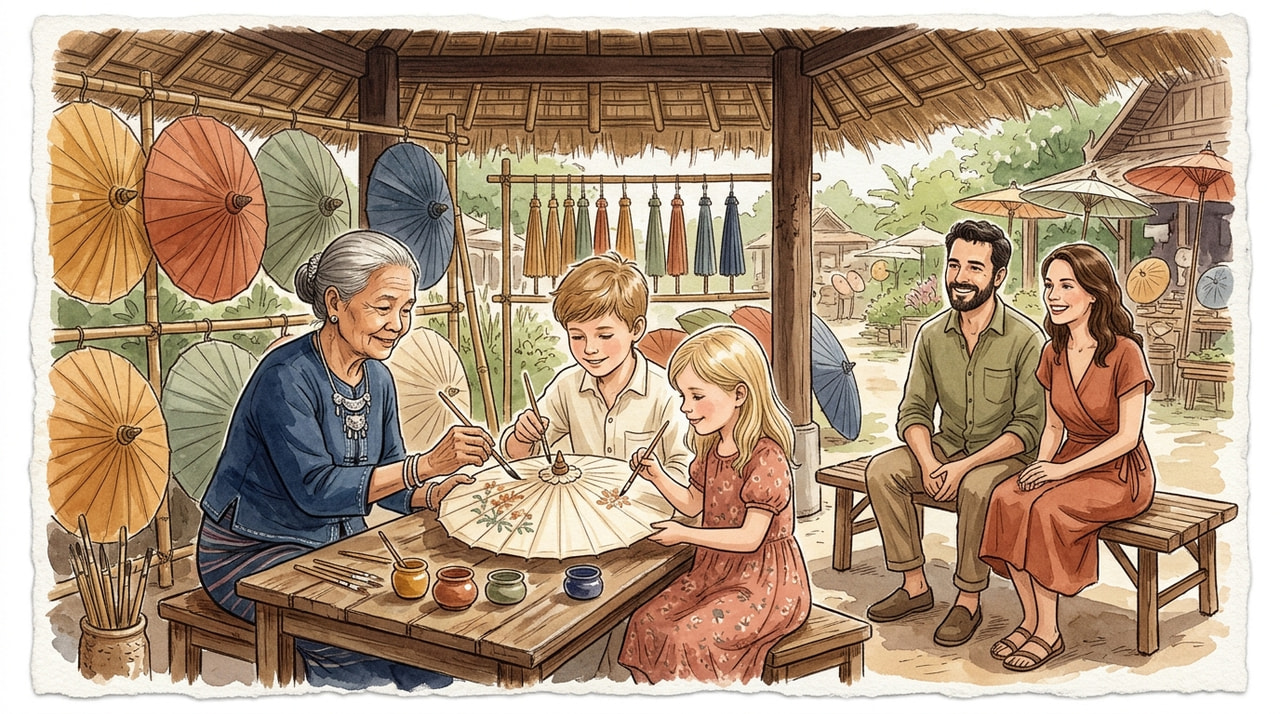
Wikipedia says Bo Sang is known for its brightly coloured handmade umbrellas and parasols, often decorated with floral designs. A visit to a workshop is an easy, calm afternoon for children, who can watch the painting and try a small piece themselves.
Eating well in Thailand
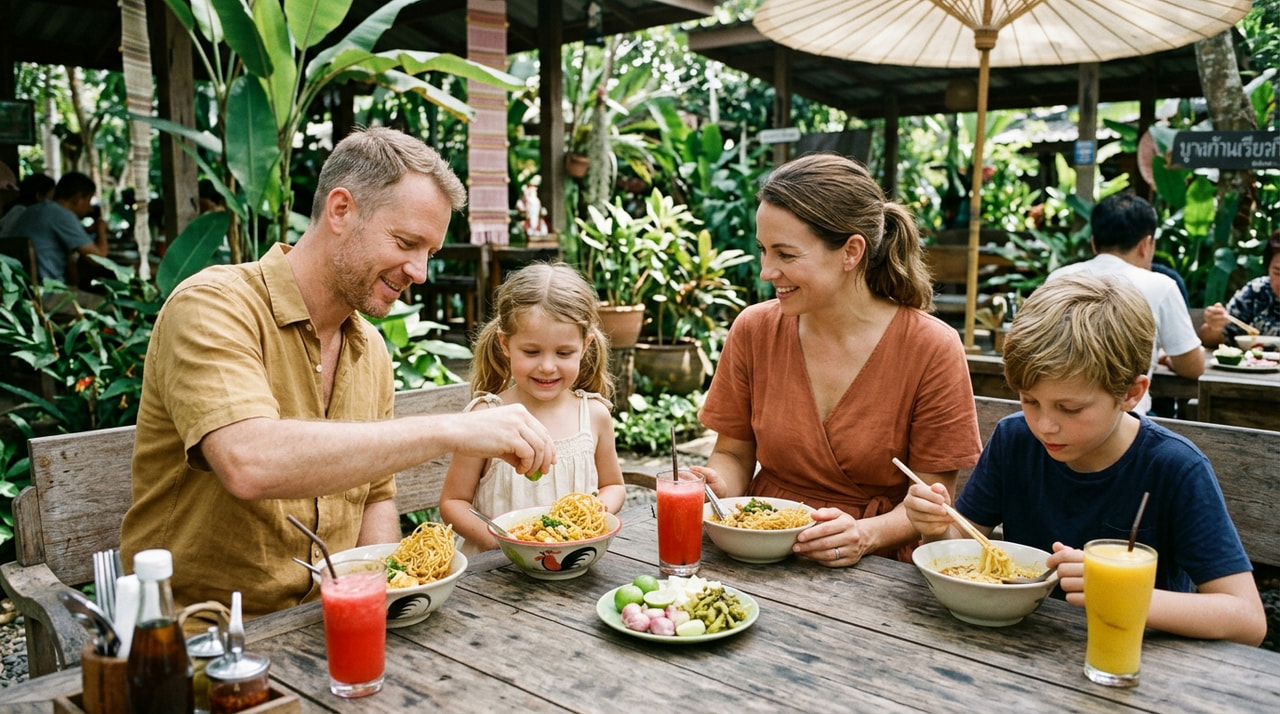
Thai food has plenty for families who avoid red meat: chicken, egg, seafood and vegetable dishes, with rice and noodles to anchor a meal. Ask for dishes with no chilli for small children, and keep the sauce on the side.
If anyone in your family has a nut allergy, talk to your doctor before you travel and learn how to explain it, because nuts are common in Thai cooking.
Health and planning
The CDC lists dengue, Zika and filariasis among diseases in Thailand that are spread by insect bites and cannot be prevented by a vaccine, and says malaria is a risk in some parts. Use insect repellent suitable for children, keep arms and legs covered at dusk, and drink bottled or treated water. Talk to your doctor about vaccines and insurance, and find out where the nearest hospital is for each place you stay.
Visa rules depend on your nationality and change. Check the official Thai government sources close to your travel dates, rather than relying on an old blog post.
Close with a next step
Thailand rewards a slower pace, a few well-chosen places and honest choices about wildlife and air. If you would like help turning this route into a journey planned from home to home, explore our Thailand Redefined expedition.